The 1960 rules, exactly
Four coloured bases, five pawns each, a board that narrows to a single winning square. Roll, move the full count, capture by landing on an opponent. Nothing added, nothing simplified.
iPad · Mac
Five pawns each. Eleven barricades. One square at the top of the board that only one of you will reach.
Malefiz — sold in English as Barricade — is the 1960 Ravensburger board game, invented by Werner Schöppner. Roll the die, walk a pawn up the board, and send anyone you land on back home. What makes it a game rather than a race is the barricades: you can never move through one, only land on it exactly — and when you do, you pick it up and put it down wherever it will hurt the most.


How it plays
Four coloured bases, five pawns each, a board that narrows to a single winning square. Roll, move the full count, capture by landing on an opponent. Nothing added, nothing simplified.
Eleven of them, and a pawn can never pass one. Land on it with an exact roll and it is yours to move — across the lane of whoever is winning, or onto the square in front of their base, shutting them in.
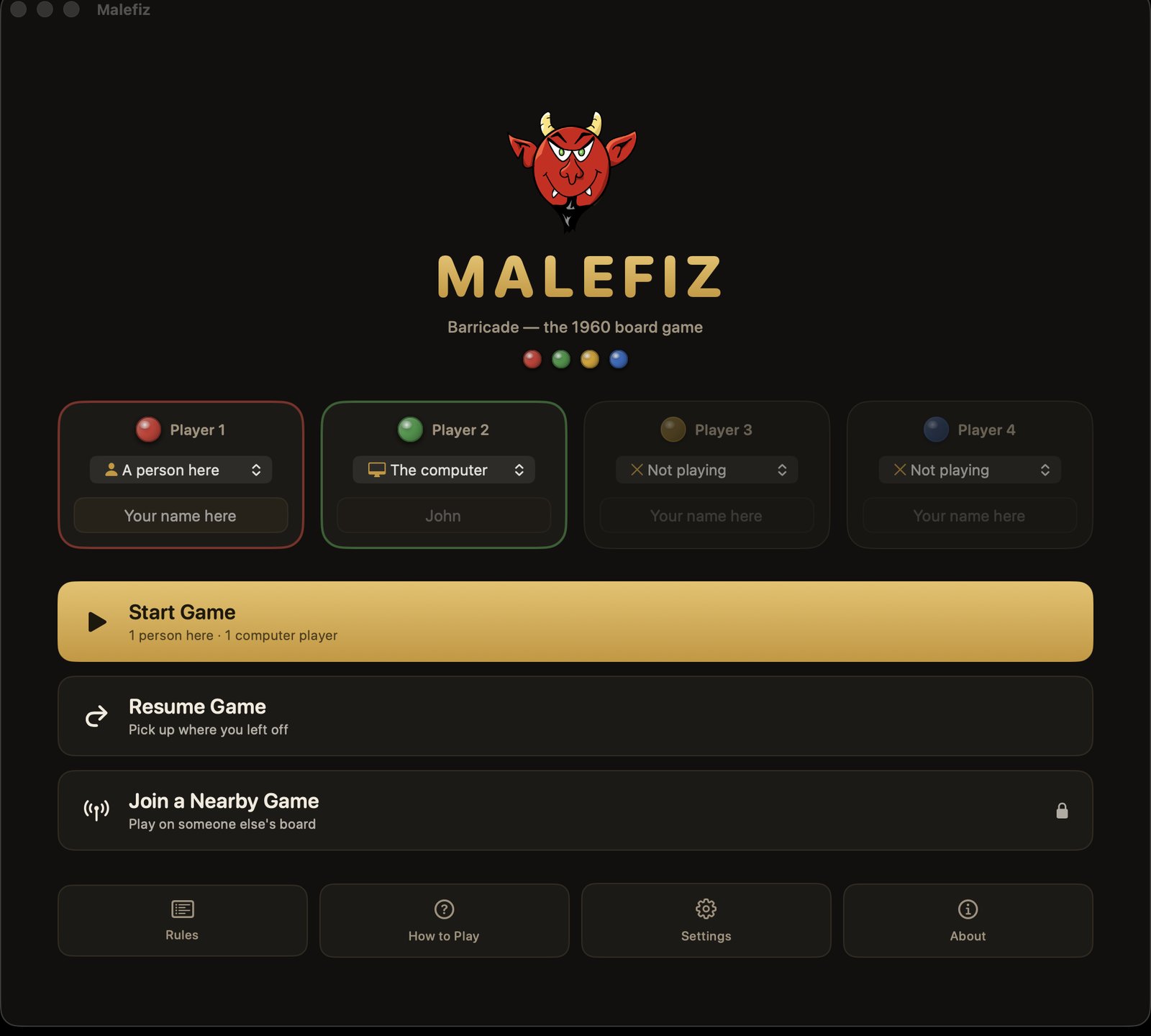
The computer player is the same one people have played since the 2010 iPad original, ported move for move — blind spots included. One to three computer seats, and they play each other as hard as they play you.
The board, the pieces and the tumbling die are drawn on the spot, so they are as sharp on a 6K display as on an iPad. Light mode is a beech games table by a window; dark mode is walnut by lamplight.
A move of five that turns two corners is shown turning two corners, so you can count it. Captured pawns are lifted straight home, the way a hand would do it.
Pass the iPad round with up to four people, or play against other iPads and Macs in the room over Wi‑Fi or Bluetooth — no accounts, no server. If someone's device drops out, the computer takes their seat so the rest can finish.
No catches
Against the computer you get everything: the real board, the real rules, all four seats, every setting, saved games, no limits. The one thing for sale is other people — more than one human seat at the same iPad, and games against other iPads and Macs nearby. One purchase, shared with your family, on iPad and Mac together.